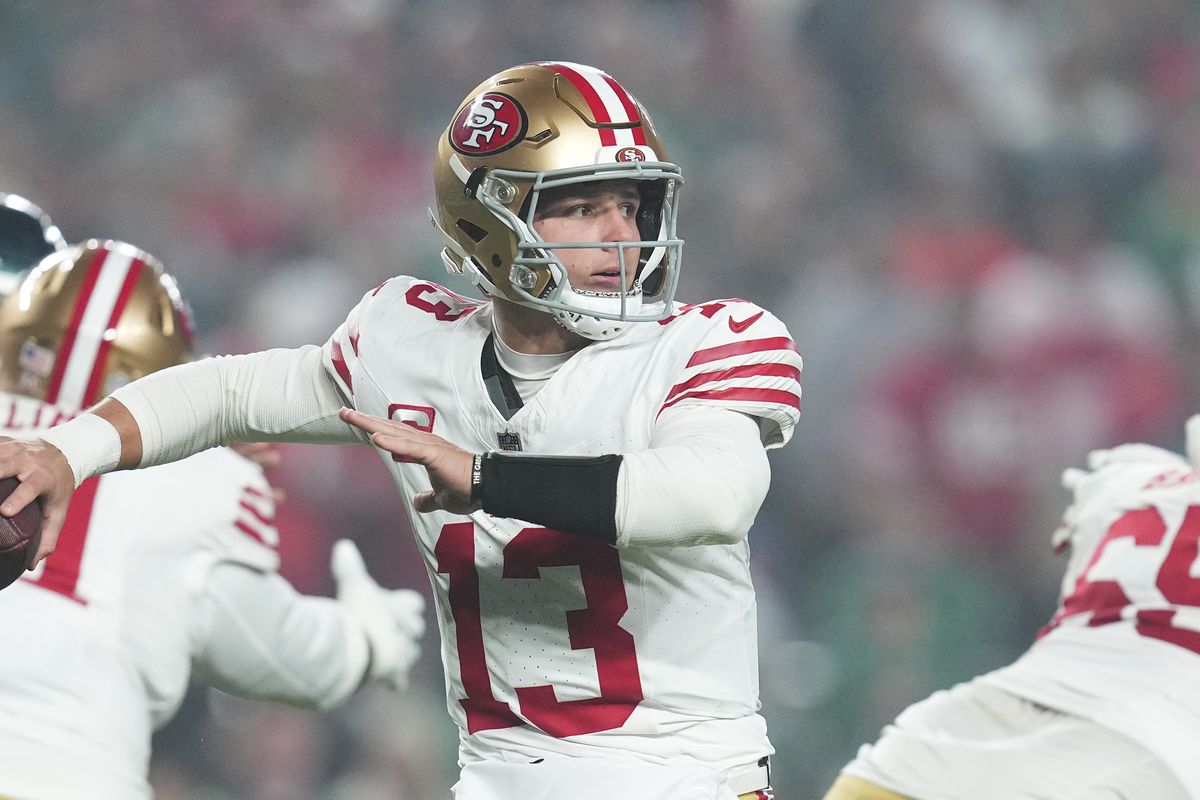
Cam Newton, Andy Dalton and the Myth of the QB Sophomore Slump
One of the debates this summer is whether or not second-year quarterbacks Cam Newton and Andy Dalton will suffer a sophomore slump after their rookie success.
CBS Sports’ Pete Prisco has been all over the angle, but nowhere to be found was any strong historical analysis that proves if the quarterback sophomore slump is real, or just another myth that generates discussion in the dog days of the NFL year.
After seeing another CBS article botch the topic by incorrectly including Marc Bulger, it was time for the Cold, Hard Football Facts to intervene with a Super Study to set the record straight.
As you will see, the research process was difficult, but we emerged with the definitive proof that the quarterback sophomore slump is a myth.
Oh it used to be real, but that was over 30 years ago.
That text is bolder than the claim itself. Just hearing the words “sophomore slump” for a quarterback should sound like a fallacy to fans when the few players that have actually been good right away came back with another great season.
Who can forget sophomore Dan Marino having one of the greatest seasons in NFL history in 1984, or Ben Roethlisberger becoming the youngest quarterback to win a Super Bowl in 2005?
What slump?
It may not come as a surprise, but the history of rookie quarterbacks and sophomore slumps falls under murky territory with strict rules for what actually counts as a NFL rookie season, and shaky research that includes some players that were not even rookies or sophomores in the years others have studied.
We worked it all out, and also will offer the much needed historical context for how rookie quarterback success has been so rare, yet so abundant in just the last few years.
Framing the QB Sophomore Slump
At its crux, the sophomore slump is a trap term. For a player to avoid it, they have to be really good. The problem is they had to be good in the first place to even suggest the idea they could suffer a sophomore slump.
You can’t fall without first getting up.
Do you see anyone predicting a sophomore slump for 2011 rookies like Blaine Gabbert and Christian Ponder? No. Those players struggled last year, and will just be hoping for job security as they try to improve this season.
Also, no one talks about a sophomore slump for Tennessee’s Jake Locker, because he did not play enough last season (no starts and 66 pass attempts). We are still waiting to see how good he is.
If the sophomore slump is for the player that did something positive as a rookie, then we must study the right players to see if it is real or not.
The Initial Dataset
Getting the right data was much harder than you might have expected. We will detail the process step by step.
First, the cutoff season was 1950, which is often a good cutoff year since it somewhat signifies the end of the two-way player era, and is when the AAFC disbanded and the NFL absorbed a few new teams (Cleveland, San Francisco).
With respect to Sammy Baugh (1937) and Bob Waterfield (1945), who won championships as rookies, the pre-1950 era resembles the dark ages for the forward pass.
An honorable mention to Charlie Conerly for his excellent rookie season in 1948 for the New York Giants when he threw 22 touchdowns, which is still second in NFL history by a rookie, only trailing Peyton Manning’s 26.
His 1949 season was not nearly as successful.
A minimum of five starts and 100 pass attempts were chosen for no real reason other than they are nice, round figures that should accomplish the goal of using rookies with some type of success on a big enough sample size.
This would eliminate a player like Mike Kruczek, who kept the seat warm for injured Terry Bradshaw on the 1976 Pittsburgh Steelers. Kruczek went 6-0 as a starter to set a NFL rookie record for consecutive wins that would be broken by Pittsburgh’s Ben Roethlisberger, but Kruczek only threw 85 passes.
That is not the type of quarterback you would want to study for a sophomore slump anyway. Bradshaw was the starter of choice.
Using the Pro-Football-Reference Play Index, we were able to search for rookie quarterbacks that met the specific requirements.
Warning: Searching for rookies on PFR is actually searching for players in the first season they saw regular season action. If a player sat on the bench his entire rookie season like a Carson Palmer (2003) or Marc Bulger (2001), then they will not show up in the results with the correct rookie season. Instead you will get 2004 for Palmer and 2002 for Bulger.
This returned 143 results, which was then filtered down by removing all the players that had rookie seasons that involved a lot of clipboard holding and no game appearances.
That gave us an initial sample of 127 “rookie” quarterbacks since 1950 with at least five starts and 100 pass attempts.
Active Sophomore QB’s
Since they are just entering their sophomore season, these five quarterbacks were excluded from the study.
Quarterback | Year | Team | GP | GS | Record | Att. | Comp. | Pct. | Yards | TD | INT | PR |
Cam Newton | 2011 | CAR | 16 | 16 | 6-10 | 517 | 310 | 60.0 | 4051 | 21 | 17 | 84.5 |
Andy Dalton | 2011 | CIN | 16 | 16 | 9-7 | 516 | 300 | 58.1 | 3398 | 20 | 13 | 80.4 |
Blaine Gabbert | 2011 | JAX | 15 | 14 | 4-10 | 413 | 210 | 50.8 | 2214 | 12 | 11 | 65.4 |
Christian Ponder | 2011 | MIN | 11 | 10 | 2-8 | 291 | 158 | 54.3 | 1853 | 13 | 13 | 70.1 |
T.J. Yates | 2011 | HOU | 6 | 5 | 2-3 | 134 | 82 | 61.2 | 949 | 3 | 3 | 80.7 |
Newton and Dalton are the big focus for this year, but even Yates would fit the bill for someone that played well enough to expect a slump from. However, Matt Schaub is back and Yates should only be the backup.
Gabbert and Ponder must first improve before anyone thinks about them declining further.
The Sub-50.0 Rookies
There were 25 quarterbacks with a passer rating under 50.0 as a rookie, which is well below league average, even when going back to several years before the 1970 merger. It would be nearly impossible for these players to “slump” any lower. Forget raising the bar. Some just left it on the floor that first season.
Here is your “Terrible 25”, which includes two Hall of Famers and two other league MVP winners. Notice only Ryan Leaf (1998) and Alex Smith (2005) appear from the Live-Ball era (post-1978). Only Joe Ferguson (9-5) had more than four wins (thanks to the most run-heavy offense since 1970), and Jack Scarbath (4-3) was the only other player with a winning record.
Quarterback | Year | Team | GP | GS | Record | Att. | Comp. | Pct. | Yards | TD | INT | PR |
Alex Smith | 2005 | SF | 9 | 7 | 2-5 | 165 | 84 | 50.9 | 875 | 1 | 11 | 40.8 |
Ryan Leaf | 1998 | SD | 10 | 9 | 3-6 | 245 | 111 | 45.3 | 1289 | 2 | 15 | 39.0 |
Joe Pisarcik | 1977 | NYG | 13 | 11 | 4-7 | 241 | 103 | 42.7 | 1346 | 4 | 14 | 42.3 |
David Whitehurst | 1977 | GB | 7 | 5 | 2-3 | 105 | 50 | 47.6 | 634 | 1 | 7 | 42.3 |
Jim Zorn | 1976 | SEA | 14 | 14 | 2-12 | 439 | 208 | 47.4 | 2571 | 12 | 27 | 49.5 |
Richard Todd | 1976 | NYJ | 13 | 6 | 2-4 | 162 | 65 | 40.1 | 870 | 3 | 12 | 33.2 |
Brian Sipe | 1974 | CLE | 10 | 5 | 2-3 | 108 | 59 | 54.6 | 603 | 1 | 7 | 47.0 |
Dan Fouts | 1973 | SD | 10 | 6 | 0-5-1 | 194 | 87 | 44.8 | 1126 | 6 | 13 | 46.0 |
Joe Ferguson | 1973 | BUF | 14 | 14 | 9-5 | 164 | 73 | 44.5 | 939 | 4 | 10 | 45.8 |
Bert Jones | 1973 | CLT | 8 | 5 | 1-4 | 108 | 43 | 39.8 | 539 | 4 | 12 | 28.8 |
Scott Hunter | 1971 | GB | 13 | 10 | 4-5-1 | 163 | 75 | 46.0 | 1210 | 7 | 17 | 46.1 |
Dan Pastorini | 1971 | HOU | 14 | 8 | 4-4 | 270 | 127 | 47.0 | 1702 | 7 | 21 | 43.8 |
Terry Bradshaw | 1970 | PIT | 13 | 8 | 3-5 | 218 | 83 | 38.1 | 1410 | 6 | 24 | 30.4 |
Terry Hanratty | 1969 | PIT | 8 | 5 | 0-5 | 126 | 52 | 41.3 | 716 | 8 | 13 | 41.7 |
Tom Sherman | 1968 | BOS | 14 | 7 | 1-6 | 226 | 90 | 39.8 | 1199 | 12 | 16 | 45.6 |
Dan Darragh | 1968 | BUF | 11 | 7 | 1-6 | 215 | 92 | 42.8 | 917 | 3 | 14 | 33.0 |
Kent Nix | 1967 | PIT | 12 | 9 | 3-6 | 268 | 136 | 50.7 | 1587 | 8 | 19 | 49.5 |
Joe Kapp | 1967 | MIN | 13 | 11 | 3-5-3 | 214 | 102 | 47.7 | 1386 | 8 | 17 | 48.2 |
Max Choboian | 1966 | DEN | 14 | 7 | 3-4 | 163 | 82 | 50.3 | 1110 | 4 | 12 | 49.9 |
Randy Johnson | 1966 | ATL | 14 | 11 | 3-8 | 295 | 129 | 43.7 | 1795 | 12 | 21 | 47.8 |
George Wilson | 1966 | MIA | 14 | 7 | 2-5 | 112 | 46 | 41.1 | 764 | 5 | 10 | 42.4 |
John Hadl | 1962 | SD | 14 | 10 | 1-9 | 260 | 107 | 41.2 | 1632 | 15 | 24 | 43.3 |
Lamar McHan | 1954 | CRD | 12 | 11 | 1-10 | 255 | 105 | 41.2 | 1475 | 6 | 22 | 32.4 |
Jack Scarbath | 1953 | WAS | 12 | 7 | 4-3 | 129 | 45 | 34.9 | 862 | 9 | 12 | 43.5 |
Tobin Rote | 1950 | GB | 12 | 12 | 3-9 | 224 | 83 | 37.1 | 1231 | 7 | 24 | 26.7 |
Did these players get better in year two as sophomores? Of course most did. Hard not to in these 25 scenarios. If they did not shape up, then they shipped out.
Such was the case of George Wilson on the expansion Miami Dolphins. Even with his dad coaching the team, Wilson was one-and-done after a tough 1966 season.
The AFL had a few bad apples. Max Choboian was one-and-done in Denver after 1964. Dan Darragh had a rotten three-year career with the Bills, and Tom Sherman was shipped from Boston to Buffalo during his second season in 1969. He would only throw two more passes in his career.
Citing the second-year improvement of the other quarterbacks here would be useless, as they were never in a position to be good enough to slump.
As a society we tend to reward the most minimal of achievement, but that will not happen at the Cold, Hard Football Facts. These 25 were excluded from the main study.
Other Exclusions
We know we wanted a minimum of five starts and 100 pass attempts. We did not want the most brutal of passing seasons. But there were still various restrictions, which eliminated 30 more quarterbacks, and they are the following batch:
Quarterback | Year | Team | GP | GS | Record | Att. | Comp. | Pct. | Yards | TD | INT | PR |
Jimmy Clausen | 2010 | CAR | 13 | 10 | 1-9 | 299 | 157 | 52.5 | 1558 | 3 | 9 | 58.4 |
Matthew Stafford | 2009 | DET | 10 | 10 | 2-8 | 377 | 201 | 53.3 | 2267 | 13 | 20 | 61.0 |
Bruce Gradkowski | 2006 | TB | 13 | 11 | 3-8 | 328 | 177 | 54.0 | 1661 | 9 | 9 | 65.9 |
Kyle Orton | 2005 | CHI | 15 | 15 | 10-5 | 368 | 190 | 51.6 | 1869 | 9 | 13 | 59.7 |
Craig Krenzel | 2004 | CHI | 6 | 5 | 3-2 | 127 | 59 | 46.5 | 718 | 3 | 6 | 52.5 |
Chad Hutchinson | 2002 | DAL | 9 | 9 | 2-7 | 250 | 127 | 50.8 | 1555 | 7 | 8 | 66.3 |
Chris Weinke | 2001 | CAR | 15 | 15 | 1-14 | 540 | 293 | 54.3 | 2931 | 11 | 19 | 62.0 |
Jeff Garcia | 1999 | SF | 13 | 10 | 2-8 | 375 | 225 | 60.0 | 2544 | 11 | 11 | 77.9 |
Tom Hodson | 1990 | NE | 7 | 6 | 0-6 | 156 | 85 | 54.5 | 968 | 4 | 5 | 68.5 |
Kelly Stouffer | 1988 | SEA | 8 | 6 | 3-3 | 173 | 98 | 56.6 | 1106 | 4 | 6 | 69.2 |
Chris Chandler | 1988 | IND | 15 | 13 | 9-4 | 233 | 129 | 55.4 | 1619 | 8 | 12 | 67.2 |
Jim Kelly | 1986 | BUF | 16 | 16 | 4-12 | 480 | 285 | 59.4 | 3593 | 22 | 17 | 83.3 |
Dieter Brock | 1985 | RAM | 15 | 15 | 11-4 | 365 | 218 | 59.7 | 2658 | 16 | 13 | 82.0 |
Bobby Hebert | 1985 | NO | 6 | 6 | 2-4 | 181 | 97 | 53.6 | 1208 | 5 | 4 | 74.6 |
Warren Moon | 1984 | HOU | 16 | 16 | 3-13 | 450 | 259 | 57.6 | 3338 | 12 | 14 | 76.9 |
Jeff Komlo | 1979 | DET | 16 | 14 | 2-12 | 368 | 183 | 49.7 | 2238 | 11 | 23 | 52.8 |
Pat Haden | 1976 | RAM | 10 | 7 | 5-1-1 | 105 | 60 | 57.1 | 896 | 8 | 4 | 94.8 |
Tom Owen | 1974 | SF | 10 | 7 | 4-3 | 184 | 88 | 47.8 | 1327 | 10 | 15 | 56.1 |
John Reaves | 1972 | PHI | 11 | 7 | 0-7 | 224 | 108 | 48.2 | 1508 | 7 | 12 | 58.4 |
Bobby Douglass | 1969 | CHI | 11 | 7 | 1-6 | 148 | 68 | 45.9 | 773 | 5 | 8 | 50.9 |
Greg Cook | 1969 | CIN | 11 | 11 | 4-6-1 | 197 | 106 | 53.8 | 1854 | 15 | 11 | 88.3 |
Marlin Briscoe | 1968 | DEN | 11 | 5 | 2-3 | 224 | 93 | 41.5 | 1589 | 14 | 13 | 62.9 |
Virgil Carter | 1968 | CHI | 7 | 5 | 4-1 | 122 | 55 | 45.1 | 769 | 4 | 5 | 59.8 |
Norm Snead | 1961 | WAS | 14 | 14 | 1-12-1 | 375 | 172 | 45.9 | 2337 | 11 | 22 | 51.6 |
Butch Songin | 1960 | BOS | 14 | 12 | 4-8 | 392 | 187 | 47.7 | 2476 | 22 | 15 | 70.9 |
George Shaw | 1955 | CLT | 12 | 12 | 5-6-1 | 237 | 119 | 50.2 | 1586 | 10 | 19 | 52.5 |
Zeke Bratkowski | 1954 | CHI | 12 | 5 | 4-1 | 130 | 67 | 51.5 | 1087 | 8 | 17 | 60.8 |
Al Dorow | 1954 | WAS | 11 | 5 | 2-3 | 138 | 70 | 50.7 | 997 | 8 | 17 | 54.2 |
Jim Root | 1953 | CRD | 11 | 6 | 0-5-1 | 192 | 80 | 41.7 | 1149 | 8 | 11 | 51.8 |
Bob Celeri | 1951 | NYY | 11 | 8 | 1-6-1 | 238 | 102 | 42.9 | 1797 | 12 | 15 | 59.8 |
There are several reasons for excluding these quarterbacks.
Lack of sophomore sample size: Many did not play enough the following season (less than 100 attempts), so it was hard to really judge their sophomore season in comparison to the rookie year.
Not playing enough does not mean a direct sign of a slump, as in many cases the player either was injured (Matthew Stafford in 2010, Chris Chandler in 1989), or he was never intended to be the guy in the first place as a rookie (Bruce Gradkowski, Kyle Orton, Craig Krenzel, etc.).
Denver’s Marlin Briscoe was cut and moved from a quarterback to a wide receiver on Buffalo for his second season.
How did Johnny Unitas become a legend for the Baltimore Colts? George Shaw, the No. 1 overall pick in the 1955 draft, was injured in his second season. Unitas was very impressive as a rookie in Shaw’s place, and like that, history was rewritten. The Colts would trade Shaw in 1959 to the New York Giants.
There is also the awkward case of Dieter Brock. If you thought Cleveland’s Brandon Weeden (28) was old for a rookie, look at the 34-year-old Brock on the 1985 Los Angeles Rams after coming over from the CFL.
Brock had good numbers, including 2,658 yards, 16 TD, 13 INT, 82.0 passer rating, all while leading the Rams to an 11-4 record and NFC Championship appearance.
And like that, he was gone. Retired from football, Brock never had a sophomore season in the NFL.
If you are talking about Cam Newton, then consider that twice Carolina had to move on from a bad season with a rookie. First it was Chris Weinke in 2001, and of course Jimmy Clausen in 2010, which led to Carolina drafting Newton first overall in 2011. Clausen never saw the field last season, thus no sophomore season to speak of.
Speaking of Clausen, some of these 28 players fall under the “too terrible to slump” category. For example, Norm Snead was the lowest-rated passer (51.6) in the NFL in 1961. The only reason they were not included in the previous section was they had a passer rating higher than 50.0.
Player must have had consecutive seasons of play: Zeke Bratkowski was a rookie in 1954 for Chicago, but then spent the next two years in the Air Force before returning to the Bears in 1957. That is very admirable, but it takes him out of the study for the sophomore slump.
Jim Root’s only two NFL seasons were in 1953 and 1956 for the Cardinals.
A more tragic case would be Greg Cook, who was outstanding as a rookie for Cincinnati in 1969, but a torn rotator cuff dashed any dreams of a long career. Cook’s only other game would be in 1973 as he unsuccessfully attempted a comeback.
Rookies who were not officially rookies: The NFL does not officially recognize the prolific Jim Kelly (1986), Warren Moon (1984) and Butch Songin (1960) as actual rookies in NFL history. This is because of their pre-NFL affiliation with other professional leagues like the CFL and USFL.
Jeff Garcia, Pat Haden, Dieter Brock and Joe Kapp also fall under this. Otto Graham, because he played in the AAFC for the Cleveland Browns, is another example of a NFL player that essentially does not have a rookie season. Y.A. Tittle also had his start in the AAFC.
That is why Kelly (3,593 yards) and Moon (3,338 yards) are not recognized as the first two rookie quarterbacks to exceed 3,000 yards passing in a season. Likewise, Butch Songin’s 22 touchdown passes for the 1960 Patriots at age 36, which would rank tied for second all time, are ignored in rookie record books.
Pat Haden and Dieter Brock do not receive credit for being the first post-merger rookies to win a playoff game. Instead that goes to Shaun King in 1999.
For what it’s worth, as sophomores, Kelly was largely the same player in 1987, and Moon regressed a little in 1985.
Not Done Yet
After three rounds of logical, necessary cuts, we were down to 67 cases, with each presenting a quarterback that threw at least 100 passes in both his rookie and sophomore seasons. However, this was still not ready to be studied for sophomore slumps.
We still had too many bad rookie seasons in the data. That included some well-known No. 1 overall picks who struggled their first year: John Elway, Troy Aikman and Eli Manning.
It would be silly to talk about a sophomore slump for these players when they showed so little as rookies. All were considerably better as sophomores, but that should not factor into the sophomore slump.
This is where things got dicey and more subjective. However, a rule was established, albeit with some exceptions, and that was to use the passer rating index (Rate+) on PFR’s Advanced Passing table, and only include players that were a 90 or higher. A mark of 100 is considered average.
This will help adjust for the era and would eliminate the really bad seasons, but only when considering the passer rating.
Players like Aikman and Jack Trudeau were the lowest-ranked passer in the league in their rookie seasons. Kerry Collins and Kyle Boller were next to last. Doug Williams was No. 26 out of 28 in 1978. Joey Harrington and David Carr were the worst in 2002.
Those are seasons you would want to kick out anyway.
Even though Tony Banks was at 90, we made a change by replacing him with Vince Young (81), who won Offensive Rookie of the Year in 2006, and even made it to the Pro Bowl as a replacement. An exception should be made for someone that achieves that, even if it may not have been a deserving distinction.
Banks fumbled 21 times, was sacked 48 times for a league-worst 306 yards lost, and Football Outsiders ranked him last in the league in DYAR in 1996, and 44th in DVOA.
With all of this information, it only seemed right to make the swap. Here are the 32 final exclusions of rookie seasons that were not good enough for a slump:
Quarterback | Year | Team | GP | GS | Record | Att. | Comp. | Pct. | Yards | TD | INT | PR |
Colt McCoy | 2010 | CLE | 8 | 8 | 2-6 | 222 | 135 | 60.8 | 1576 | 6 | 9 | 74.5 |
Josh Freeman | 2009 | TB | 10 | 9 | 3-6 | 290 | 158 | 54.5 | 1855 | 10 | 18 | 59.8 |
Mark Sanchez | 2009 | NYJ | 15 | 15 | 8-7 | 364 | 196 | 53.8 | 2444 | 12 | 20 | 63.0 |
Trent Edwards | 2007 | BUF | 10 | 9 | 5-4 | 269 | 151 | 56.1 | 1630 | 7 | 8 | 70.4 |
Charlie Frye | 2005 | CLE | 7 | 5 | 2-3 | 164 | 98 | 59.8 | 1002 | 4 | 5 | 72.8 |
Eli Manning | 2004 | NYG | 9 | 7 | 1-6 | 197 | 95 | 48.2 | 1043 | 6 | 9 | 55.4 |
Kyle Boller | 2003 | BAL | 11 | 9 | 5-4 | 224 | 116 | 51.8 | 1260 | 7 | 9 | 62.4 |
Patrick Ramsey | 2002 | WAS | 10 | 5 | 2-3 | 227 | 117 | 51.5 | 1539 | 9 | 8 | 71.8 |
Joey Harrington | 2002 | DET | 14 | 12 | 3-9 | 429 | 215 | 50.1 | 2294 | 12 | 16 | 59.9 |
David Carr | 2002 | HOU | 16 | 16 | 4-12 | 444 | 233 | 52.5 | 2592 | 9 | 15 | 62.8 |
Quincy Carter | 2001 | DAL | 8 | 8 | 3-5 | 176 | 90 | 51.1 | 1072 | 5 | 7 | 63.0 |
Donovan McNabb | 1999 | PHI | 12 | 6 | 2-4 | 216 | 106 | 49.1 | 948 | 8 | 7 | 60.1 |
Cade McNown | 1999 | CHI | 15 | 6 | 2-4 | 235 | 127 | 54.0 | 1465 | 8 | 10 | 66.7 |
Tony Banks | 1996 | RAM | 14 | 13 | 5-8 | 368 | 192 | 52.2 | 2544 | 15 | 15 | 71.0 |
Kerry Collins | 1995 | CAR | 15 | 13 | 7-6 | 433 | 214 | 49.4 | 2717 | 14 | 19 | 61.9 |
Heath Shuler | 1994 | WAS | 11 | 8 | 1-7 | 265 | 120 | 45.3 | 1658 | 10 | 12 | 59.6 |
Rick Mirer | 1993 | SEA | 16 | 16 | 6-10 | 486 | 274 | 56.4 | 2833 | 12 | 17 | 67.0 |
Drew Bledsoe | 1993 | NE | 13 | 12 | 5-7 | 429 | 214 | 49.9 | 2494 | 15 | 15 | 65.0 |
Rodney Peete | 1989 | DET | 8 | 8 | 3-5 | 195 | 103 | 52.8 | 1479 | 5 | 9 | 67.0 |
Troy Aikman | 1989 | DAL | 11 | 11 | 0-11 | 293 | 155 | 52.9 | 1749 | 9 | 18 | 55.7 |
Billy Joe Tolliver | 1989 | SD | 5 | 5 | 2-3 | 185 | 89 | 48.1 | 1097 | 5 | 8 | 57.9 |
Steve Walsh | 1989 | DAL | 8 | 5 | 1-4 | 219 | 110 | 50.2 | 1371 | 5 | 9 | 60.5 |
Jack Trudeau | 1986 | IND | 12 | 11 | 0-11 | 417 | 204 | 48.9 | 2225 | 8 | 18 | 53.5 |
Steve Young | 1985 | TB | 5 | 5 | 1-4 | 138 | 72 | 52.2 | 935 | 3 | 8 | 56.9 |
John Elway | 1983 | DEN | 11 | 10 | 4-6 | 259 | 123 | 47.5 | 1663 | 7 | 14 | 54.9 |
Mike Pagel | 1982 | CLT | 9 | 9 | 0-8-1 | 221 | 111 | 50.2 | 1281 | 5 | 7 | 62.4 |
Neil Lomax | 1981 | CRD | 14 | 7 | 4-3 | 236 | 119 | 50.4 | 1575 | 4 | 10 | 59.9 |
David Woodley | 1980 | MIA | 13 | 11 | 6-5 | 327 | 176 | 53.8 | 1850 | 14 | 17 | 63.1 |
Steve Fuller | 1979 | KC | 16 | 12 | 6-6 | 270 | 146 | 54.1 | 1484 | 6 | 14 | 55.8 |
Doug Williams | 1978 | TB | 10 | 10 | 4-6 | 194 | 73 | 37.6 | 1170 | 7 | 8 | 53.4 |
Karl Sweetan | 1966 | DET | 10 | 8 | 2-5-1 | 309 | 157 | 50.8 | 1809 | 4 | 14 | 54.3 |
Bill Munson | 1964 | RAM | 11 | 8 | 2-4-2 | 223 | 108 | 48.4 | 1533 | 9 | 15 | 56.5 |
The only players from the 32 to play worse as sophomores were Heath Shuler in 1995 and Karl Sweetan in 1967. Even those are not significant slumps.
Steve Walsh was traded from Dallas to New Orleans, so he did not progress with the same team. Not like Jimmy Johnson should have drafted Walsh and Troy Aikman together in the first place.
Mark Sanchez is the only player here to win a playoff game. He may have reached the AFC Championship in 2009, but his 23 turnovers were detrimental to the team, who really only made it thanks to the Colts passing on perfection in Week 16.
Like so many of these 32, Sanchez did get better as a sophomore, but we feel good about keeping him in this list.
The Sophomore Slump Study
Finally, we had our 35 quarterbacks to look at for the sophomore slump. Without further ado, here they are.
Quarterback | Year | Team | GP | GS | Record | Att. | Comp. | Pct. | Yards | TD | INT | PR |
Sam Bradford | 2010 | RAM | 16 | 16 | 7-9 | 590 | 354 | 60.0 | 3512 | 18 | 15 | 76.5 |
Matt Ryan | 2008 | ATL | 16 | 16 | 11-5 | 434 | 265 | 61.1 | 3440 | 16 | 11 | 87.7 |
Joe Flacco | 2008 | BAL | 16 | 16 | 11-5 | 428 | 257 | 60.0 | 2971 | 14 | 12 | 80.3 |
Jay Cutler | 2006 | DEN | 5 | 5 | 2-3 | 137 | 81 | 59.1 | 1001 | 9 | 5 | 88.5 |
Matt Leinart | 2006 | CRD | 12 | 11 | 4-7 | 377 | 214 | 56.8 | 2547 | 11 | 12 | 74.0 |
Vince Young | 2006 | TEN | 15 | 13 | 8-5 | 357 | 184 | 51.5 | 2199 | 12 | 13 | 66.7 |
Ben Roethlisberger | 2004 | PIT | 14 | 13 | 13-0 | 295 | 196 | 66.4 | 2621 | 17 | 11 | 98.1 |
Byron Leftwich | 2003 | JAX | 15 | 13 | 5-8 | 418 | 239 | 57.2 | 2819 | 14 | 16 | 73.0 |
Shaun King | 1999 | TB | 6 | 5 | 4-1 | 146 | 89 | 61.0 | 875 | 7 | 4 | 82.4 |
Tim Couch | 1999 | CLE | 15 | 14 | 2-12 | 399 | 223 | 55.9 | 2447 | 15 | 13 | 73.2 |
Charlie Batch | 1998 | DET | 12 | 12 | 5-7 | 303 | 173 | 57.1 | 2178 | 11 | 6 | 83.5 |
Peyton Manning | 1998 | IND | 16 | 16 | 3-13 | 575 | 326 | 56.7 | 3739 | 26 | 28 | 71.2 |
Jake Plummer | 1997 | CRD | 10 | 9 | 3-6 | 296 | 157 | 53.0 | 2203 | 15 | 15 | 73.1 |
Jeff George | 1990 | IND | 13 | 12 | 5-7 | 334 | 181 | 54.2 | 2152 | 16 | 13 | 73.8 |
Steve Beuerlein | 1988 | RAI | 10 | 8 | 4-4 | 238 | 105 | 44.1 | 1643 | 8 | 7 | 66.6 |
Don Majkowski | 1987 | GB | 7 | 5 | 2-2-1 | 127 | 55 | 43.3 | 875 | 5 | 3 | 70.2 |
Jim Everett | 1986 | RAM | 6 | 5 | 3-2 | 147 | 73 | 49.7 | 1018 | 8 | 8 | 67.8 |
Bernie Kosar | 1985 | CLE | 12 | 10 | 4-6 | 248 | 124 | 50.0 | 1578 | 8 | 7 | 69.3 |
Dan Marino | 1983 | MIA | 11 | 9 | 7-2 | 296 | 173 | 58.4 | 2210 | 20 | 6 | 96.0 |
Jim McMahon | 1982 | CHI | 8 | 7 | 3-4 | 210 | 120 | 57.1 | 1501 | 9 | 7 | 79.9 |
Phil Simms | 1979 | NYG | 12 | 11 | 6-5 | 265 | 134 | 50.6 | 1743 | 13 | 14 | 66.0 |
Steve Grogan | 1975 | NE | 13 | 7 | 1-6 | 274 | 139 | 50.7 | 1976 | 11 | 18 | 60.4 |
Steve Bartkowski | 1975 | ATL | 11 | 11 | 4-7 | 255 | 115 | 45.1 | 1662 | 13 | 15 | 59.3 |
Jim Plunkett | 1971 | NE | 14 | 14 | 6-8 | 328 | 158 | 48.2 | 2158 | 19 | 16 | 68.6 |
Archie Manning | 1971 | NO | 12 | 10 | 3-5-2 | 177 | 86 | 48.6 | 1164 | 6 | 9 | 60.1 |
Dennis Shaw | 1970 | BUF | 14 | 12 | 3-8-1 | 321 | 178 | 55.5 | 2507 | 10 | 20 | 65.3 |
Bob Griese | 1967 | MIA | 12 | 10 | 3-7 | 331 | 166 | 50.2 | 2005 | 15 | 18 | 61.6 |
Joe Namath | 1965 | NYJ | 13 | 9 | 3-5-1 | 340 | 164 | 48.2 | 2220 | 18 | 15 | 68.7 |
Mickey Slaughter | 1963 | DEN | 13 | 7 | 1-5-1 | 223 | 112 | 50.2 | 1689 | 12 | 15 | 65.4 |
Fran Tarkenton | 1961 | MIN | 14 | 10 | 2-8 | 280 | 157 | 56.1 | 1997 | 18 | 17 | 74.7 |
Sam Etcheverry | 1961 | CRD | 14 | 9 | 4-5 | 196 | 96 | 49.0 | 1275 | 14 | 11 | 70.4 |
Tom Flores | 1960 | RAI | 14 | 12 | 5-7 | 252 | 136 | 54.0 | 1738 | 12 | 12 | 71.8 |
Johnny Green | 1960 | BUF | 10 | 6 | 3-3 | 228 | 89 | 39.0 | 1267 | 10 | 10 | 54.1 |
Johnny Unitas | 1956 | CLT | 12 | 7 | 3-4 | 198 | 110 | 55.6 | 1498 | 9 | 10 | 74.0 |
Eddie LeBaron | 1952 | WAS | 12 | 7 | 1-6 | 194 | 96 | 49.5 | 1420 | 14 | 15 | 65.7 |
That was the rookie season. Now the real test came in the sophomore season. Adding the results together yielded surprising results.
QB Type | Win% | APG | Comp. % | YPG | YPA | TD% | INT% | PR |
Rookie | 0.440 | 24.0 | 54.1 | 164.3 | 6.84 | 4.43 | 4.18 | 73.0 |
Sophomore | 0.466 | 26.6 | 56.0 | 183.5 | 6.91 | 4.15 | 4.18 | 73.9 |
As sophomores, the quarterbacks had a small rise in attempts per game (APG), had a better completion percentage, but they only had a marginal gain in YPA, actually did worse at throwing touchdowns, and saw no difference in their rate of interceptions. The passer rating is not even a full point higher.
While this does not speak well for a second-year improvement, it also debunks the idea of a sophomore slump. Collectively, these players improved by the smallest of margins. They did not decline.
Of course, that is the group collectively. When you look at the individuals, it is easy to see why the quarterback sophomore slump was created. It used to be true.
For the 35 cases, we concluded 20 showed improvement, while 15 suffered some type of sophomore slump. Though not a number to be ignored, that is a minority 42.9 percent for the sophomore slump.
Here are the 15 players we chose for the sophomore slump being real: Eddie LeBaron, Tom Flores, Sam Etcheverry, Fran Tarkenton, Mickey Slaughter, Joe Namath, Dennis Shaw, Jim Plunkett, Steve Bartkowski, Phil Simms, Don Majkowski, Jeff George, Matt Leinart, Matt Ryan, and Sam Bradford.
Rookie quarterback success was so very rare, and the sophomore slump claimed 10 of our first 15 quality rookies. That is two-thirds, and takes us through Phil Simms in 1979.
That also means 15 of our last 20 rookies (75 percent) did not suffer a sophomore slump. Though their may be three recent cases since 2006, the myth of the slump has really been dead since the 80s.
This table perfectly sums up the disappearance of the sophomore slump.
Type | Win% | APG | Comp. % | YPG | YPA | TD% | INT% | PR |
Rookie 1950-79 | 0.356 | 20.3 | 50.1 | 138.5 | 6.81 | 5.02 | 5.57 | 65.8 |
Sophomore 1951-80 | 0.324 | 22.9 | 50.1 | 150.4 | 6.56 | 4.34 | 6.19 | 59.8 |
Type | Win% | APG | Comp. % | YPG | YPA | TD% | INT% | PR |
Rookie 1980-10 | 0.495 | 27.0 | 56.5 | 185.2 | 6.85 | 4.08 | 3.34 | 77.4 |
Sophomore 1981-11 | 0.553 | 29.2 | 59.2 | 207.1 | 7.10 | 4.05 | 3.05 | 81.8 |
The worst sophomore slumps happened several decades ago. Think of examples like Eddie LeBaron, Jim Plunkett, Steve Bartkowski, Mickey Slaughter, and Sam Etcheverry.
That is not to say there have not been recent slumps, but they are not on the level of some just mentioned. Some would even argue two of these players were not good enough as rookies to justify the slump.
Matt Ryan was not as good in 2009 as he was his rookie season, but it was still a successful year. He missed two games with injury, or else he may have equaled his record of 11-5, and had even more volume stats as he took on a heavier workload.
Matt Leinart had an underrated rookie season for Arizona in 2006, but under new coach Ken Whisenhunt, he did not get better in 2007. Whisenhunt had him splitting time with Kurt Warner, and in the fifth game of the season, Leinart was lost for the year with a shoulder injury. He also permanently lost his job to Warner in Arizona, and is now considered a bust.
Sam Bradford’s rookie season was overrated to begin with, so maybe not much of a surprise he did not get better last season. In 10 games, Bradford managed just six touchdown passes. However, his slump really started in the 12th game of 2010.
Split | Record | Pct. | YPA | TD | INT | PR |
Games 1-11 | 5-6 | 60.5 | 5.97 | 17 | 9 | 82.0 |
Games 12-26 | 3-12 | 55.2 | 6.01 | 7 | 12 | 68.2 |
If you have not had your fill of tables, for one last time, here is a comparison of our 35 quarterbacks’ quality rookie season versus their sophomore season (listed second for each quarterback).
Quarterback | Year | Team | GP | GS | Record | Att. | Comp. | Pct. | Yards | TD | INT | PR |
Archie Manning | 1971 | NO | 12 | 10 | 3-5-2 | 177 | 86 | 48.6 | 1164 | 6 | 9 | 60.1 |
Archie Manning | 1972 | NO | 14 | 14 | 2-11-1 | 448 | 230 | 51.3 | 2781 | 18 | 21 | 64.6 |
Ben Roethlisberger | 2004 | PIT | 14 | 13 | 13-0 | 295 | 196 | 66.4 | 2621 | 17 | 11 | 98.1 |
Ben Roethlisberger | 2005 | PIT | 12 | 12 | 9-3 | 268 | 168 | 62.7 | 2385 | 17 | 9 | 98.6 |
Bernie Kosar | 1985 | CLE | 12 | 10 | 4-6 | 248 | 124 | 50.0 | 1578 | 8 | 7 | 69.3 |
Bernie Kosar | 1986 | CLE | 16 | 16 | 12-4 | 531 | 310 | 58.4 | 3854 | 17 | 10 | 83.8 |
Bob Griese | 1967 | MIA | 12 | 10 | 3-7 | 331 | 166 | 50.2 | 2005 | 15 | 18 | 61.6 |
Bob Griese | 1968 | MIA | 13 | 13 | 5-7-1 | 355 | 186 | 52.4 | 2473 | 21 | 16 | 75.7 |
Byron Leftwich | 2003 | JAX | 15 | 13 | 5-8 | 418 | 239 | 57.2 | 2819 | 14 | 16 | 73.0 |
Byron Leftwich | 2004 | JAX | 14 | 14 | 8-6 | 441 | 267 | 60.5 | 2941 | 15 | 10 | 82.2 |
Charlie Batch | 1998 | DET | 12 | 12 | 5-7 | 303 | 173 | 57.1 | 2178 | 11 | 6 | 83.5 |
Charlie Batch | 1999 | DET | 11 | 10 | 6-4 | 270 | 151 | 55.9 | 1957 | 13 | 7 | 84.1 |
Dan Marino | 1983 | MIA | 11 | 9 | 7-2 | 296 | 173 | 58.4 | 2210 | 20 | 6 | 96.0 |
Dan Marino | 1984 | MIA | 16 | 16 | 14-2 | 564 | 362 | 64.2 | 5084 | 48 | 17 | 108.9 |
Dennis Shaw | 1970 | BUF | 14 | 12 | 3-8-1 | 321 | 178 | 55.5 | 2507 | 10 | 20 | 65.3 |
Dennis Shaw | 1971 | BUF | 13 | 12 | 1-11 | 291 | 149 | 51.2 | 1813 | 11 | 26 | 46.1 |
Don Majkowski | 1987 | GB | 7 | 5 | 2-2-1 | 127 | 55 | 43.3 | 875 | 5 | 3 | 70.2 |
Don Majkowski | 1988 | GB | 13 | 9 | 3-6 | 336 | 178 | 53.0 | 2119 | 9 | 11 | 67.8 |
Eddie LeBaron | 1952 | WAS | 12 | 7 | 1-6 | 194 | 96 | 49.5 | 1420 | 14 | 15 | 65.7 |
Eddie LeBaron | 1953 | WAS | 12 | 5 | 2-2-1 | 149 | 62 | 41.6 | 874 | 3 | 17 | 28.3 |
Fran Tarkenton | 1961 | MIN | 14 | 10 | 2-8 | 280 | 157 | 56.1 | 1997 | 18 | 17 | 74.7 |
Fran Tarkenton | 1962 | MIN | 14 | 14 | 2-11-1 | 329 | 163 | 49.5 | 2595 | 22 | 25 | 66.9 |
Jake Plummer | 1997 | CRD | 10 | 9 | 3-6 | 296 | 157 | 53.0 | 2203 | 15 | 15 | 73.1 |
Jake Plummer | 1998 | CRD | 16 | 16 | 9-7 | 547 | 324 | 59.2 | 3737 | 17 | 20 | 75.0 |
Jay Cutler | 2006 | DEN | 5 | 5 | 2-3 | 137 | 81 | 59.1 | 1001 | 9 | 5 | 88.5 |
Jay Cutler | 2007 | DEN | 16 | 16 | 7-9 | 467 | 297 | 63.6 | 3497 | 20 | 14 | 88.1 |
Jeff George | 1990 | IND | 13 | 12 | 5-7 | 334 | 181 | 54.2 | 2152 | 16 | 13 | 73.8 |
Jeff George | 1991 | IND | 16 | 16 | 1-15 | 485 | 292 | 60.2 | 2910 | 10 | 12 | 73.8 |
Jim Everett | 1986 | RAM | 6 | 5 | 3-2 | 147 | 73 | 49.7 | 1018 | 8 | 8 | 67.8 |
Jim Everett | 1987 | RAM | 11 | 11 | 5-6 | 302 | 162 | 53.6 | 2064 | 10 | 13 | 68.4 |
Jim McMahon | 1982 | CHI | 8 | 7 | 3-4 | 210 | 120 | 57.1 | 1501 | 9 | 7 | 79.9 |
Jim McMahon | 1983 | CHI | 14 | 13 | 7-6 | 295 | 175 | 59.3 | 2184 | 12 | 13 | 77.6 |
Jim Plunkett | 1971 | NE | 14 | 14 | 6-8 | 328 | 158 | 48.2 | 2158 | 19 | 16 | 68.6 |
Jim Plunkett | 1972 | NE | 14 | 14 | 3-11 | 355 | 169 | 47.6 | 2196 | 8 | 25 | 45.7 |
Joe Flacco | 2008 | BAL | 16 | 16 | 11-5 | 428 | 257 | 60.0 | 2971 | 14 | 12 | 80.3 |
Joe Flacco | 2009 | BAL | 16 | 16 | 9-7 | 499 | 315 | 63.1 | 3613 | 21 | 12 | 88.9 |
Joe Namath | 1965 | NYJ | 13 | 9 | 3-5-1 | 340 | 164 | 48.2 | 2220 | 18 | 15 | 68.7 |
Joe Namath | 1966 | NYJ | 14 | 13 | 5-6-2 | 471 | 232 | 49.3 | 3379 | 19 | 27 | 62.6 |
Johnny Green | 1960 | BUF | 10 | 6 | 3-3 | 228 | 89 | 39.0 | 1267 | 10 | 10 | 54.1 |
Johnny Green | 1961 | BUF | 8 | 5 | 2-3 | 126 | 56 | 44.4 | 903 | 6 | 5 | 68.3 |
Johnny Unitas | 1956 | CLT | 12 | 7 | 3-4 | 198 | 110 | 55.6 | 1498 | 9 | 10 | 74.0 |
Johnny Unitas | 1957 | CLT | 12 | 12 | 7-5 | 301 | 172 | 57.1 | 2550 | 24 | 17 | 88.0 |
Matt Leinart | 2006 | CRD | 12 | 11 | 4-7 | 377 | 214 | 56.8 | 2547 | 11 | 12 | 74.0 |
Matt Leinart | 2007 | CRD | 5 | 5 | 3-2 | 112 | 60 | 53.6 | 647 | 2 | 4 | 61.9 |
Matt Ryan | 2008 | ATL | 16 | 16 | 11-5 | 434 | 265 | 61.1 | 3440 | 16 | 11 | 87.7 |
Matt Ryan | 2009 | ATL | 14 | 14 | 9-5 | 451 | 263 | 58.3 | 2916 | 22 | 14 | 80.9 |
Mickey Slaughter | 1963 | DEN | 13 | 7 | 1-5-1 | 223 | 112 | 50.2 | 1689 | 12 | 15 | 65.4 |
Mickey Slaughter | 1964 | DEN | 14 | 4 | 0-3-1 | 189 | 97 | 51.3 | 930 | 3 | 11 | 46.4 |
Peyton Manning | 1998 | IND | 16 | 16 | 3-13 | 575 | 326 | 56.7 | 3739 | 26 | 28 | 71.2 |
Peyton Manning | 1999 | IND | 16 | 16 | 13-3 | 533 | 331 | 62.1 | 4135 | 26 | 15 | 90.7 |
Phil Simms | 1979 | NYG | 12 | 11 | 6-5 | 265 | 134 | 50.6 | 1743 | 13 | 14 | 66.0 |
Phil Simms | 1980 | NYG | 13 | 13 | 3-10 | 402 | 193 | 48.0 | 2321 | 15 | 19 | 58.9 |
Sam Bradford | 2010 | RAM | 16 | 16 | 7-9 | 590 | 354 | 60.0 | 3512 | 18 | 15 | 76.5 |
Sam Bradford | 2011 | RAM | 10 | 10 | 1-9 | 357 | 191 | 53.5 | 2164 | 6 | 6 | 70.5 |
Sam Etcheverry | 1961 | CRD | 14 | 9 | 4-5 | 196 | 96 | 49.0 | 1275 | 14 | 11 | 70.4 |
Sam Etcheverry | 1962 | CRD | 14 | 3 | 1-3 | 106 | 58 | 54.7 | 707 | 2 | 10 | 42.5 |
Shaun King | 1999 | TB | 6 | 5 | 4-1 | 146 | 89 | 61.0 | 875 | 7 | 4 | 82.4 |
Shaun King | 2000 | TB | 16 | 16 | 10-6 | 428 | 233 | 54.4 | 2769 | 18 | 13 | 75.8 |
Steve Bartkowski | 1975 | ATL | 11 | 11 | 4-7 | 255 | 115 | 45.1 | 1662 | 13 | 15 | 59.3 |
Steve Bartkowski | 1976 | ATL | 5 | 5 | 1-4 | 120 | 57 | 47.5 | 677 | 2 | 9 | 39.5 |
Steve Beuerlein | 1988 | RAI | 10 | 8 | 4-4 | 238 | 105 | 44.1 | 1643 | 8 | 7 | 66.6 |
Steve Beuerlein | 1989 | RAI | 10 | 7 | 4-3 | 217 | 108 | 49.8 | 1677 | 13 | 9 | 78.4 |
Steve Grogan | 1975 | NE | 13 | 7 | 1-6 | 274 | 139 | 50.7 | 1976 | 11 | 18 | 60.4 |
Steve Grogan | 1976 | NE | 14 | 14 | 11-3 | 302 | 145 | 48.0 | 1903 | 18 | 20 | 60.6 |
Tim Couch | 1999 | CLE | 15 | 14 | 2-12 | 399 | 223 | 55.9 | 2447 | 15 | 13 | 73.2 |
Tim Couch | 2000 | CLE | 7 | 7 | 2-5 | 215 | 137 | 63.7 | 1483 | 7 | 9 | 77.3 |
Tom Flores | 1960 | RAI | 14 | 12 | 5-7 | 252 | 136 | 54.0 | 1738 | 12 | 12 | 71.8 |
Tom Flores | 1961 | RAI | 14 | 14 | 2-12 | 366 | 190 | 51.9 | 2176 | 15 | 19 | 62.1 |
Vince Young | 2006 | TEN | 15 | 13 | 8-5 | 357 | 184 | 51.5 | 2199 | 12 | 13 | 66.7 |
Vince Young | 2007 | TEN | 15 | 15 | 9-6 | 382 | 238 | 62.3 | 2546 | 9 | 17 | 71.1 |
Looking Ahead
This season, perhaps more than any in history, will put a lot of focus on rookie and sophomore quarterbacks. Right now we are expecting nine teams to start a rookie or sophomore quarterback in Week 1. That could increase to 10 if Russell Wilson wins the job in Seattle, and he was not even a first-round pick.
Quarterbacks make so much money today, that teams want to see a quick return on investment. The NFL fixed the rookie salary cap, meaning no rookie will be seeing Sam Bradford-money again, but they are still the highest-paid position.
Expectations for the young quarterback are being raised, and in many cases, are being met. As you can see, there is not a great history of a true rookie quarterback having success in the NFL, so that can explain why people freak out and overrate a season like Cam Newton’s last year.
Ben Roethlisberger did great things in 2004, but no one else really stepped up until 2008, which appears to be the year things changed when Matt Ryan and Joe Flacco ended up with 11-5 records and were in the playoffs.
Consider these facts:
- After Dennis Shaw won the AP Offensive Rookie of the Year, no quarterback won it until Ben Roethlisberger in 2004. Since then, five of the last eight winners of that award are quarterbacks.
- Since 1970, only five rookie quarterbacks have won a playoff game, and four of them have come since 2004; three since 2008 (Roethlisberger, Joe Flacco, Mark Sanchez, T.J. Yates).
- In 2006, Matt Leinart set a rookie record with 405 passing yards in a game. He has since been surpassed by Matthew Stafford (422 yards in 2009), and Cam Newton (432 yards in 2011).
- The rookie records for pass attempts, completions and yards have all been broken in the last two seasons.
- More rookie quarterbacks have thrown for 3,000 yards in the last four seasons (4) than the one (Peyton Manning) that did it prior to 2008.
Finally, it was only four years ago when Chris Weinke was second all time to Peyton in rookie passing yards with 2,931 yards. Today, Weinke ranks 7th, and he could easily be out of the top 10 by the end of this 2012 season.
Newton’s rookie record of 4,051 passing yards last season may only last one season with the next crop ready to go (Andrew Luck, Robert Griffin III, Ryan Tannehill, and Brandon Weeden).
That is the NFL today. Rookies now have expectations, because they can meet them. There is no sophomore slump. This is the year you take it to the next level, because that is what you are supposed to do.
Scott Kacsmar is a football writer/researcher who has contributed large quantities of data to Pro-Football-Reference.com, including the only standardized database of fourth quarter comebacks and game-winning drives. He will not have a sophomore slump. That’s for damn sure. You can visit his blog for a complete writing archive. Please send any questions or comments to Scott at smk_42@yahoo.com, or you can follow him on Twitter at @CaptainComeback.
- Hockey Announcer Gone Wild: You Want To Party (Maybe) With This Guy
- Best Pass Defense Ever: Ronde Barber And The 2002 Tampa Bay Buccaneers
- Reese Witherspoon Arrest Video: Hot, Bothered And Handcuffed
- Sam Adams In A Can, Just In Time For Summer Drinking Season
- Live From Radio City: Reporter Punks NFL Draft Fans
- The 5.0 Club: Best Rushing Teams in NFL History
- Sieves: The Worst Run Defenses In NFL History
- Monsters of the Midway: We Need The Chicago Bears More Than Ever
- Boston, Sports, Patriotism And Terror
- The 100 Stingiest Defenses In Football History
- NFL Crown Rule: Will It Dethrone Rushing King Adrian Peterson?
- Year Of The Offensive Tackle: Not Always The 'Safe' Draft Bet
- Draft Habits: NFL Teams Covet LBs, Duped By False Temptress WRs
- Big Tease: 2012 New England Patriots And NFL's History Of Offensive Failures
- Epic Fail: The Wide Receiver Draft Class Of 2012